A Guide to Philippine Payment Methods for iGaming
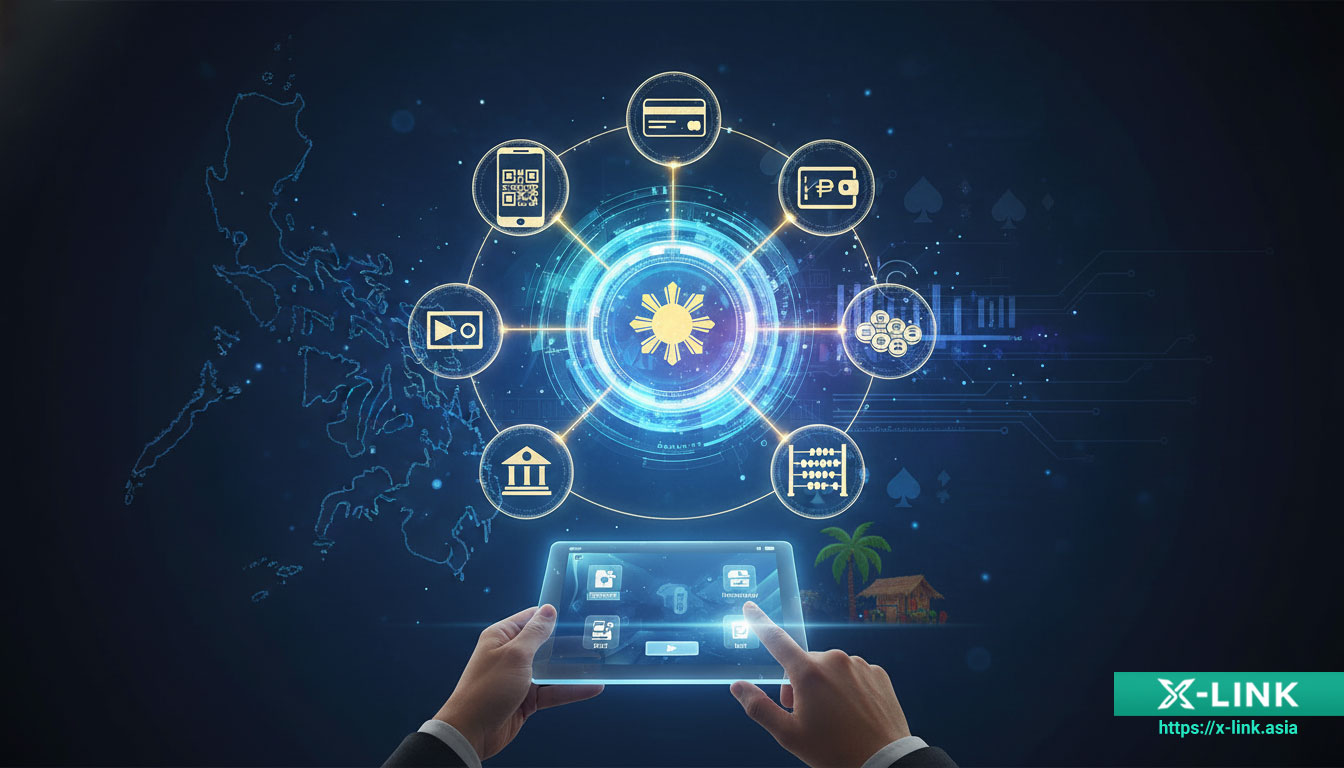
Introduction: Why Standard Payments Fail in the Philippines
Let’s be direct about the most common point of failure for operators entering the Philippines: an unexpectedly high rate of failed deposits. This is not a technical glitch; it is a strategic miscalculation, born from the assumption that a standard, card-centric payment stack can function in a market that has almost completely bypassed it. Your international gateway might offer dozens of options, but if they aren’t the few that truly matter to Filipinos, your conversion rates will remain critically low.
Success in iGaming here is not achieved by offering more payment methods, but by providing the right ones. The market is dictated by a unique, mobile-first payment culture dominated by a handful of powerful e-wallets. This guide provides a clear, actionable breakdown of the essential methods required for successful Philippine igaming payments, ensuring your entry into this high-growth market is built on a foundation that actually works. You will learn what your players expect and how to deliver it.
Understanding the Philippine Player: A Mobile-First Reality
To build a winning payment strategy, you must first discard any Western-centric assumptions. The market for Philippine igaming payments has not evolved along the path of plastic cards; it has leapfrogged directly to mobile payments. While credit card penetration remains extremely low—a recent TransUnion study noted only one in 20 consumers held a credit card in 2025—the adoption of e-wallets is explosive. Projections show the country is expected to add 23 million mobile wallet users between 2023 and 2028 alone.
This transformation is not accidental. It is the direct result of the Digital Payments Transformation Roadmap driven by the Bangko Sentral ng Pilipinas (BSP). The BSP has aggressively pushed for a cash-lite economy, and the results are clear: the central bank surpassed its goal of digitizing 50% of retail payment volume, reaching 52.8% by the end of 2023. This figure grew to 57.4% in 2024, exceeding development plan targets. The key takeaway for any operator is that this is not an “emerging” market waiting to adopt cards. It is a fully-formed digital economy that has already chosen its preferred payment rails, and they are mobile.
The Core Methods for iGaming Payments in the Philippines
Understanding the market is the first step; configuring your cashier with the correct, non-negotiable payment methods is the second. In the Philippines, this is not a long list. An operator’s success hinges on providing a few specific options that have become deeply embedded in the daily financial lives of your players. Attempting to enter this market without direct, reliable integrations for the following methods is the primary reason for high deposit failure rates. This is the operational core of successful Philippine iGaming payments, a topic we cover in a broader regional context in our iGaming payment processing guide.
GCash: The Undisputed Leader
It is impossible to overstate the dominance of GCash. With a user base exceeding 94 million as of late 2023, it is less a payment app and more a ubiquitous financial utility for the majority of the adult population. For your players, GCash is the default method for everything from paying bills to ordering food, and they expect the same seamless experience for funding their gaming accounts. The question is not if you should accept GCash for online casino deposits; it is a baseline requirement for market entry. Failing to offer a native, one-tap GCash integration is the single fastest way to lose a player during the deposit process. It is the primary tool for player conversion, and its absence is a critical operational failure.
Maya: The Essential Competitor
While GCash is the market leader, Maya (formerly PayMaya) is the indispensable second pillar of your payment strategy. Backed by PLDT, one of the country’s largest telecommunications companies, Maya commands a significant and loyal user base. It is the preferred e-wallet for millions of Filipinos, and not offering it means you are willingly ignoring a substantial segment of your addressable market. The operational goal is to maximize deposit success rates, and that requires providing the top two options. Supporting Maya for gaming transactions is not about redundancy; it is about market completion. Offering both GCash and Maya ensures you are catering to the overwhelming majority of e-wallet users, drastically reducing the friction that leads to abandoned deposits.
QR Ph: The Unifying Standard
QR Ph is the national QR code standard mandated by the Bangko Sentral ng Pilipinas. It is not a separate brand but a universal protocol that allows for instant, interoperable payments between a customer’s bank or e-wallet app and a merchant. Integrating QR Ph for iGaming is a strategic, future-proof decision. It allows any player with a BSP-supervised banking or e-wallet app to simply scan a code and approve the payment. This is a powerful tool because it consolidates dozens of potential payment sources into a single, streamlined user experience. For players who prefer to transact directly from their bank account, QR Ph is often faster and simpler than navigating a separate e-wallet top-up process.
The Strategic Advantage: A Unified Gateway for the Philippines
Knowing which payment methods to offer is one challenge; integrating and managing them is another. The direct path—engaging in a separate payment integration project for GCash, another for Maya, and a third for the banking network behind QR Ph—is a significant drain on technical resources. This approach creates a complex web of multiple APIs to maintain, disparate settlement reports to reconcile, and several relationships to manage, delaying your market entry and increasing operational overhead.
The strategic alternative is a unified gateway built for the unique demands of the Philippine market. Instead of fragmented projects, a single API provides access to all essential local payment methods. This radically simplifies the technical lift for your development team, collapsing months of work into a single, efficient integration. The business advantages are immediate: you get to market faster, your finance team benefits from streamlined reconciliation through one platform, and your operational focus shifts from managing technical debt to growing your player base. Our dedicated page for Philippine payments details how our infrastructure is specifically designed for this purpose, forming a core part of our comprehensive iGaming solutions.
Conclusion: Secure Your Position in the Philippine Market
Securing a profitable position in the Philippine iGaming market is a direct result of mastering its specific, mobile-first payment ecosystem. The difference between a failed launch and a successful one is not the quality of your platform, but your ability to provide the non-negotiable payment options that players demand: GCash, Maya, and QR Ph. This challenge, however, does not have to be a complex, resource-draining initiative for your technical teams.
Choosing the right payment partner provides the critical infrastructure needed to bypass these integration hurdles. We have already built the rails into this dynamic market. Work with an expert who can accelerate your market entry and provide the unified platform necessary for immediate conversions and long-term growth.