The Top 5 Challenges of Asian Payment Integration for Gaming Platforms
Introduction: The Hidden Technical Debt of Asian Expansion
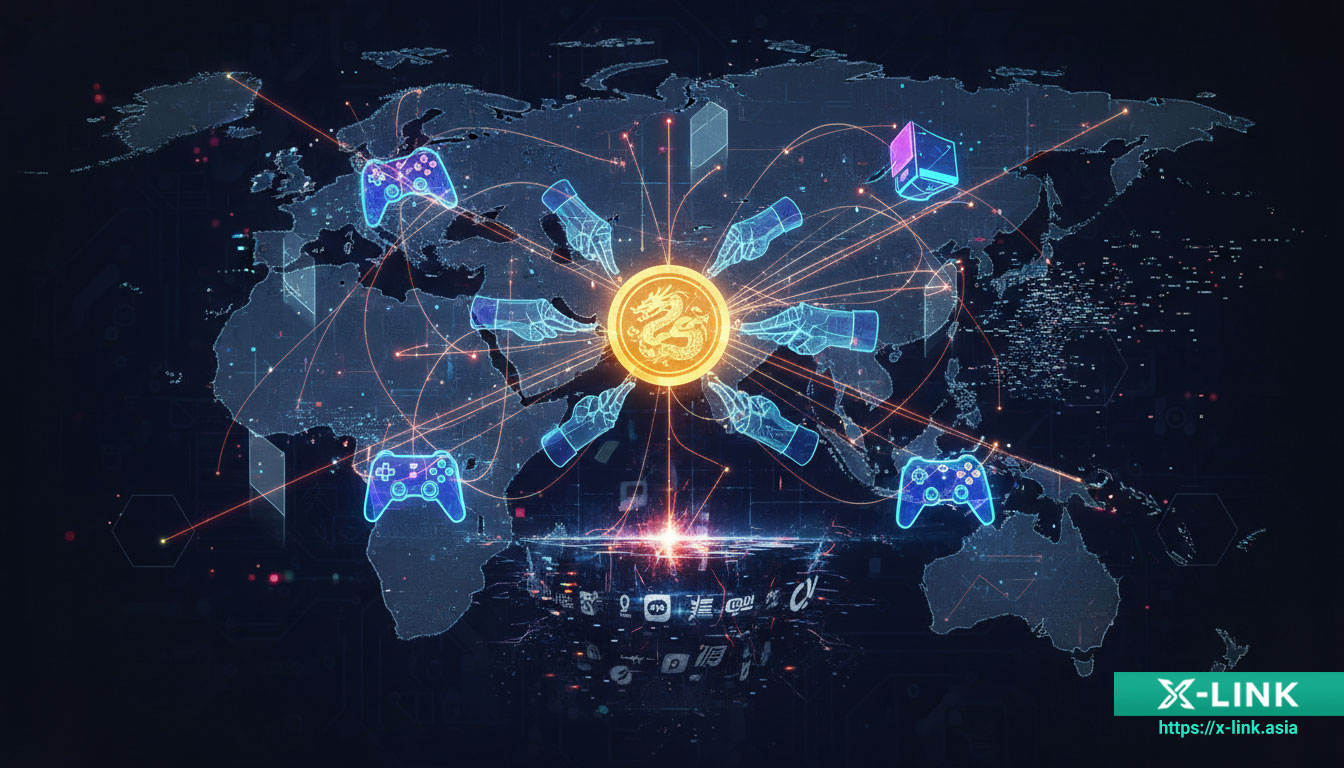
For CTOs of high-growth gaming platforms, the push into Asia comes with a significant and often underestimated cost: the accumulation of hidden technical debt. The initial win of launching a new market by integrating a local payment method quickly devolves into a long-term maintenance burden. Each new country adds another disparate API, another set of reconciliation reports, and another point of failure, consuming valuable engineering cycles that should be dedicated to core product innovation, not payment plumbing. The primary issue is not the technical complexity of any single integration; it is the operational drag of managing a dozen of them simultaneously. The real challenges of Asian payment integration are rooted in this fragmentation. This briefing breaks down the five core technical hurdles your engineering team will face—from disjointed APIs to the nightmare of multi-currency reconciliation—and presents a strategic framework for avoiding this trap from day one.
The Top 5 Integration Challenges for iGaming CTOs
From an engineering perspective, the core challenges of Asian payment integration are not about solving a single, complex technical problem. Instead, they manifest as a war of attrition—a slow accumulation of disparate systems that creates a fragile, high-maintenance, and costly payment infrastructure. For a CTO, this translates directly into wasted development cycles, increased operational risk, and a significant drag on product velocity. Below are the five primary technical hurdles that turn a promising expansion strategy into a source of persistent iGaming payment issues.
Challenge #1: A Fragmented Ecosystem of Disjointed APIs
The most immediate challenge is the sheer diversity of providers required to achieve meaningful market coverage. Supporting multi-country payments in Asia means your team is not building one integration; they are building a dozen. Each e-wallet and bank transfer network—from GCash and PayMaya in the Philippines to MoMo in Vietnam and QRIS in Indonesia—operates on its own island. This ecosystem of disjointed APIs means developers must contend with unique authentication protocols, wildly different error code taxonomies, inconsistent callback logic, and separate documentation for every single connection. The engineering effort does not scale linearly; it scales exponentially with each new market you enter.
Challenge #2: The Reconciliation Nightmare
The second major engineering headache is reconciliation. Once transactions are flowing, the finance team needs a unified view of funds, fees, and settlements. However, each payment provider delivers settlement reports in their own unique format (CSV, JSON, API endpoint), on their own schedule (T+1, T+3), and in their own local currency. The task of building and maintaining a data pipeline to ingest, parse, normalize, and reconcile this disparate data against your platform’s internal transaction ledger is a significant and ongoing backend engineering project. This is a classic data-wrangling problem that consumes resources better spent on your core product.
Challenge #3: The Compliance Burden on Engineering
Navigating the diverse regulatory requirements across Asia translates directly into coding and infrastructure tasks. Data sovereignty rules in countries like Vietnam or Indonesia might dictate where player data can be stored, forcing a deviation from your standard global infrastructure and adding complexity to your deployment pipeline. Specific reporting mandates from central banks require the creation of custom data export tools. These compliance-driven tasks are a direct tax on your development roadmap, as detailed in any comprehensive iGaming payment processing guide.
Challenge #4: Inconsistent Documentation and “Black Box” Support
A frequent source of frustration and delay is the variable quality of technical resources provided by local payment companies. Engineers often find themselves working with sparse, outdated, or poorly translated API documentation, turning what should be a straightforward integration into a process of trial and error. When issues arise, technical support is often routed through non-technical, first-line agents, making it nearly impossible to debug API-level problems efficiently. This creates a “black box” scenario where your team is responsible for a service they cannot fully see or control.
Challenge #5: The High Maintenance Overhead of a Fragile System
The most significant long-term cost of a direct-to-provider integration model is the maintenance. This multi-headed system is inherently fragile. When a single local provider deprecates an endpoint or updates their security protocol—often with minimal notice—a part of your payment stack breaks. This pulls your senior engineers off their planned work to firefight the issue. A system built on dozens of individual connections is a system that is constantly breaking, creating a reactive and inefficient development culture. Building such critical infrastructure yourself is akin to building your own data centers instead of using reliable infrastructure like AWS. You are solving a problem that has already been solved, as outlined in A Developer’s Guide to Integrating a Pan-Asian Payment API. These recurring iGaming payment issues are a direct consequence of this architectural choice.
The Strategic Solution: A Unified API as an Infrastructure Asset
The strategic response to this fragmentation is not to build a more resilient, in-house system to tame it, but to abstract it away entirely. A unified API should be viewed as a strategic piece of infrastructure, akin to using a cloud provider for compute or a CDN for content delivery. It is a classic “buy versus build” decision where the correct choice is to offload the non-core, undifferentiated heavy lifting of payment plumbing to a specialist. This infrastructure layer sits between your platform and the chaotic ecosystem of local providers, ingesting all of the complexity and presenting a single, clean, and consistent endpoint to your development team.
This approach directly solves the five core challenges. The problem of disjointed APIs vanishes behind a single integration contract. The reconciliation nightmare is solved through normalized, consolidated reporting delivered via a single channel. The maintenance overhead of managing dozens of fragile connections is outsourced to the infrastructure partner. By treating payments as a foundational service layer, your team is insulated from the constant changes and inconsistencies of the underlying providers. This dramatically accelerates time-to-market for new market entry and, most critically, frees your engineers to focus on building the features that actually differentiate your product. A true platform partner also bundles in adjacent services like tools for effective chargeback prevention, further simplifying your stack.
Conclusion: Build Your Stack on the Right Foundation
The “integrate everything ourselves” approach to Asian payments is a strategic trap. It embeds fragility and unnecessary complexity directly into your core tech stack, guaranteeing a future of high maintenance costs and diverted engineering resources. A system built on a patchwork of disparate APIs is not a scalable asset; it is a long-term liability. A true platform partner provides the stable, unified foundation required to build for scale, abstracting away the chaos of the underlying market. Stop wasting engineering cycles on payment plumbing and focus on your product. Build your stack on infrastructure designed for the unique demands of the Asian gaming market. Explore our developer-first approach and see the difference a solid foundation makes.